Are Snake Boots Waterproof? What to Check Before Buying
Waterproofing and snake protection are separate features. Learn the three ways boots keep water out and how to read the wording on a listing.
As an Amazon Associate, SnakeBootGuide.com may earn from qualifying purchases.
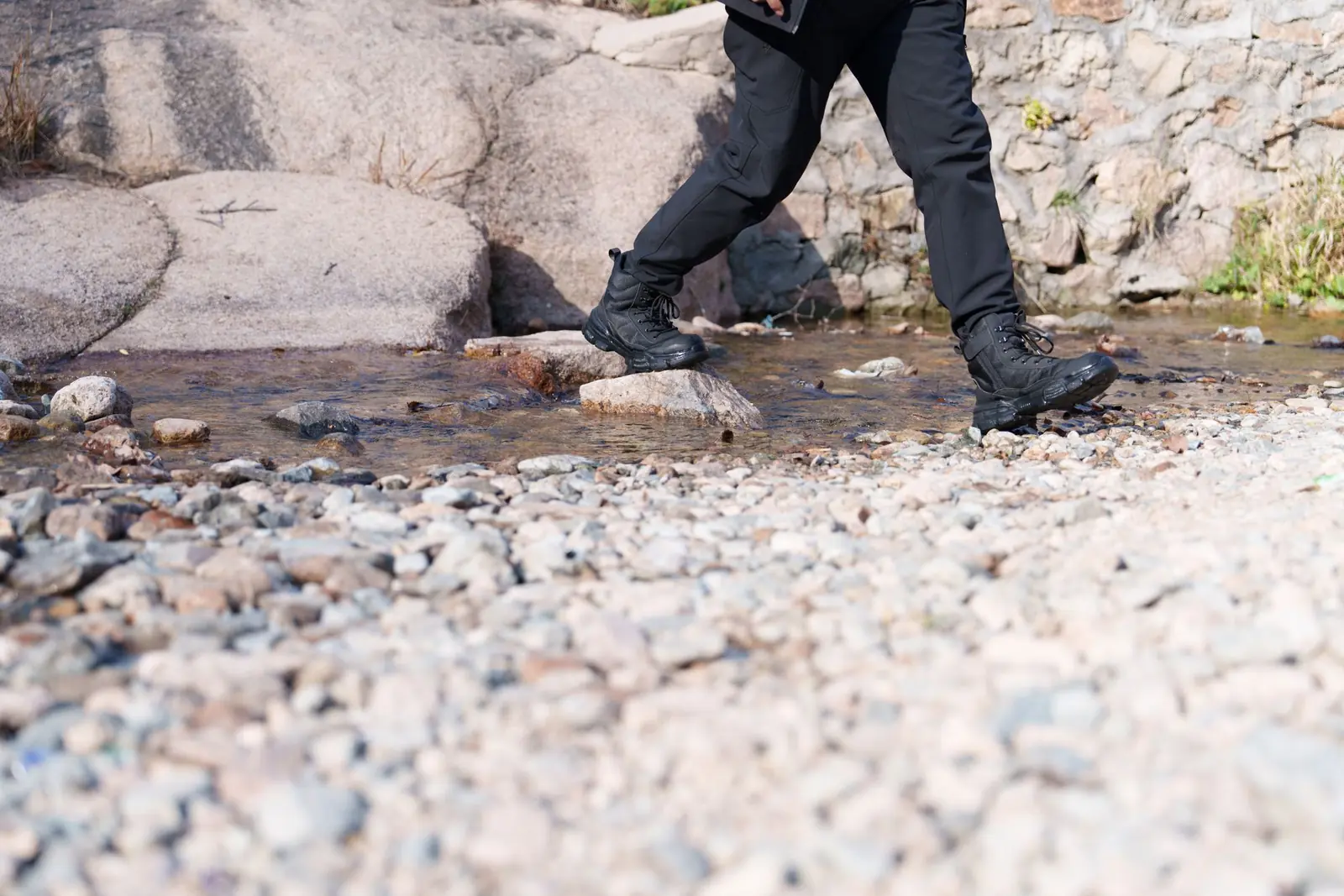
Short answer: not necessarily. “Snake boot” describes a protective claim about the shaft, while “waterproof” describes how the boot handles water. A boot can be one, both or neither, and listings do not always make the difference clear.
Waterproof and snake protection are different features
A rubber boot keeps water out because rubber is waterproof. A leather boot might keep water out because of a membrane or sealed seams. Neither fact tells you anything about whether the shaft resists a fang. Check the manufacturer’s protection claim and the waterproofing claim separately.
Three ways boots keep water out
| Approach | How it works | Things to check |
|---|---|---|
| Rubber construction | The boot material itself is waterproof | Tends to be less breathable; the top opening is still the weak point |
| Membrane and sealed seams | A waterproof liner and taped seams in a leather or textile boot | Breathability can be reduced; check where the membrane ends |
| Treated leather | Water-repellent treatment on the leather | Usually water-resistant, not waterproof; treatment wears and needs renewing |
“Waterproof” vs “water-resistant”
They are different promises. Waterproof should mean water does not get through the boot under stated conditions; water-resistant usually means the boot sheds light moisture for a while. If a listing only says “water-resistant”, plan for wet feet in sustained wet conditions.
Look for specifics: how waterproofing is achieved, what the manufacturer says about immersion, and where the waterproof section ends.
Where water gets in anyway
- The top opening: water coming over the shaft defeats any sealed boot. Match the height of the waterproof section to the depth you will wade.
- Zippers and gussets: check whether they are sealed or covered by a flap.
- Seams and wear: cracks, cuts and worn treatments let water in over time.
- Sweat: a waterproof boot that does not breathe can leave feet damp from the inside.
The breathability trade-off
Fully waterproof construction tends to trap moisture, so in hot weather feet can feel damper. Sock choice, ventilation details and how long you wear the boots all matter. If heat is your main concern, see snake boots for hot weather.
When you may not need waterproofing
In hot, dry country, waterproofing may matter less than breathability and weight. Wet terrain, rainy seasons, dew-heavy mornings and stream crossings are where it earns its place. See snake boots for swamps and wet ground.
Care: wet boots must dry
Whatever the construction, wet boots should dry fully between trips, away from direct high heat unless the manufacturer says otherwise. Follow the care instructions, and track cleaning and treatment in our Maintenance Tracker.
What to read on a listing
- The exact wording: waterproof, water-resistant or neither.
- How waterproofing is achieved (rubber, membrane, sealed seams, treatment).
- The height of the waterproof section.
- Whether zippers and gussets are sealed.
- The manufacturer’s separate snake-protection claim.
Looking at waterproof options? This link opens Amazon search results. We have not ranked or endorsed any listing.
Browse waterproof snake boots on AmazonFrequently asked questions
Are all snake boots waterproof?
No. Some are fully waterproof, some are water-resistant and some are neither. Check the exact wording for the model you are considering.
Is a waterproof boot also snake proof?
No. They are separate features, so check the manufacturer’s protection claim as well. See what snake-proof labels tell you.
Are gaiters waterproof?
Not necessarily. Many gaiters use water-resistant fabric but are not sealed like a waterproof boot. Look at what the manufacturer states. See snake boots vs gaiters.
Sources and further reading
You May Also Like
Buying Guide
How to Choose Snake Boots: 9 Things to Check Before You Buy
A practical way to compare snake boots on facts instead of marketing: protection claims, shaft height, materials, waterproofing, fit, weight, closures, traction and care.
Read guide
How-To
How Tall Should Snake Boots Be? What the Numbers Do and Don’t Tell You
Shaft heights of roughly 15 to 18 inches are common, but there is no single right number. Learn how heights are measured, how to…
Read guide
How-To
Snake Boot Sizing Guide: How to Get the Right Fit
Tall boots have two fits to get right: the foot and the calf. Here is how to measure both, what to check when you…
Read guide
Comparison
Leather vs Rubber Snake Boots: Which Makes More Sense for Your Terrain?
Materials trade off water, breathability, weight, noise and care. Here are the general tendencies of leather and rubber, and why neither guarantees snake protection.
Read guide